Salt Air Solar Panel Cleaning for Coastal Broward Homes
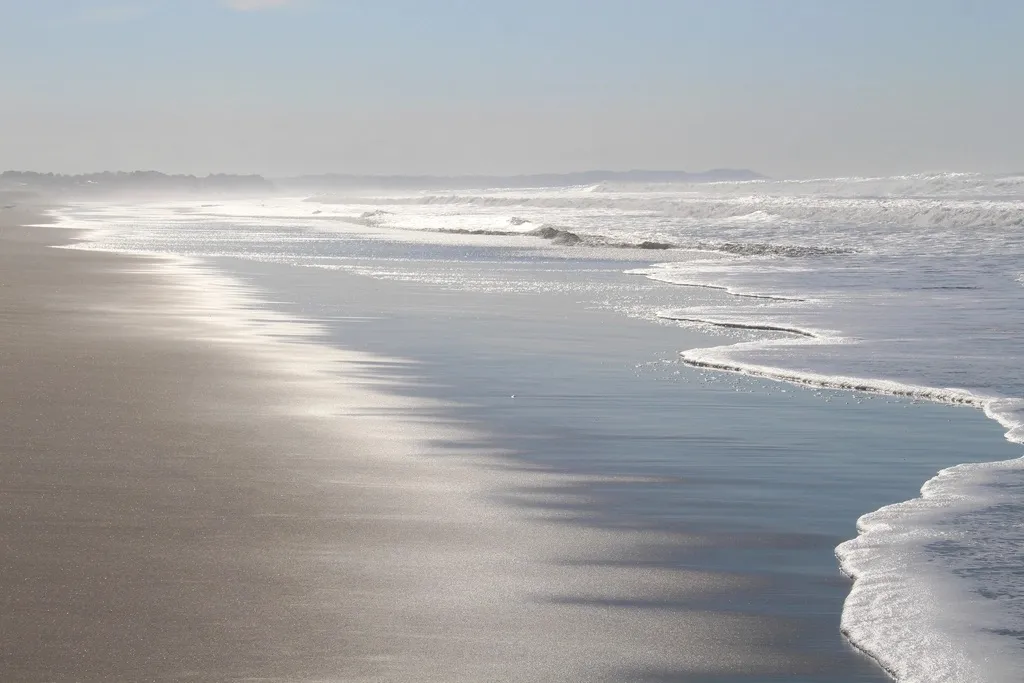
If your home is on the water or a few blocks from it, your solar panels collect a salt film that inland panels mostly don’t. It builds steadily, it doesn’t rinse off in the rain, and it dries into a haze that cuts the light reaching the cells. For coastal Broward and east Boca Raton homes we recommend quarterly solar panel cleaning with deionized water instead of the twice-a-year schedule that suits most inland roofs.
How far inland does salt air reach?
Farther than most people expect. Wind picks up salt where waves break and where it blows across open water, and carries it inland as a fine spray. UF/IFAS Extension advises that plants within about an eighth of a mile of saltwater should be at least somewhat salt tolerant. If the salt is strong enough to matter to your hedge, it is landing on your roof too.
In our area that describes a lot of homes, and not only the ones on the beach. The Intracoastal and the canals are saltwater, so the finger islands and canal streets count as well:
- Lighthouse Point: the canal streets off Lighthouse Drive and NE 24th Street, and the Intracoastal waterfront.
- Las Olas Isles: Seven Isles, Nurmi Isles, Idlewyld, Hendricks Isle and the other finger islands off Las Olas Boulevard.
- Coral Ridge and Rio Vista: the Intracoastal and New River waterfront and the canal-front streets.
- Deerfield Beach: The Waterways and the other homes along the Intracoastal.
- East Boca Raton: the neighborhoods between the Intracoastal and the ocean.
What salt film on solar panels looks like
From the driveway it rarely looks dramatic. The glass loses its deep blue-black and looks slightly milky, like a car windshield a week after a beach day. Up close you can see a fine white residue, often heaviest along the lower edge of each panel, where water runs off and evaporates. Run a finger across a panel you can safely reach and it comes away gritty.
That haze is the problem. Solar cells respond to the light that gets through the glass, and a film that scatters some of it costs output every sunny hour. Unlike a bird dropping, salt covers the whole array evenly. Your monitoring app shows it as a slow sag rather than a sudden drop, which makes it easy to miss.
Why a hose makes it worse
Salt dissolves in water, so rinsing seems like the obvious fix. The trouble is what the rinse water leaves behind. Tap water carries its own dissolved minerals, and when it dries on warm glass it leaves spots. On a coastal roof you end up trading an even salt haze for salt plus water spots.
We clean with deionized water, which has had its dissolved minerals removed. It takes the salt into solution and dries without leaving anything behind. With a soft brush on a water-fed pole, it lifts the film without pressure, detergents or anything abrasive on the glass. Pressure washing is the wrong tool here and on every array; we covered why in does Florida rain clean solar panels.
How often should coastal homes clean their panels?
Quarterly. Most inland homes do well on two visits a year, in May after the pollen tail and in November when hurricane season ends. A roof that picks up salt every day gets a meaningful film between those two visits, so coastal homes do better on four. The maintenance plan has a quarterly option built for exactly this, at 15% off every visit. Seasonal residents can have the visits done while they’re away, with the photos sent to their phone.
Storms add to it. A tropical system passing offshore can coat the glass with salt spray overnight, which is why a coastal roof is the first one we’d look at after a blow. The post-storm checklist covers what to check yourself before anyone goes up.
What else salt air is hard on
Salt air is tough on anything metal near the water; ask any boat owner. Every cleaning includes a visual look at the array, and a visual inspection photographs each panel, the frames and the visible hardware. Anything discolored, loose or out of place goes into the photo report for your solar company. We clean and photograph; we don’t take hardware apart.
The short version for coastal Broward
If you can smell the ocean from your yard, or your dock is at the end of it, your panels need more attention than the ones in Coral Springs. Quarterly deionized-water cleaning keeps the salt from building into a film that quietly costs you production. The South Florida soiling calendar shows what else lands on the glass through the year.
Get a free quote or call (954) 872-1622 to put your coastal roof on a quarterly schedule.
Gold Coast Solar, Fort Lauderdale. Owner-operated solar panel cleaning across Broward and southern Palm Beach County.
Last reviewed:
Related services
Related pages
Need your solar panels cleaned?
Free quotes from Gold Coast Solar, Fort Lauderdale. Call or send the form.